
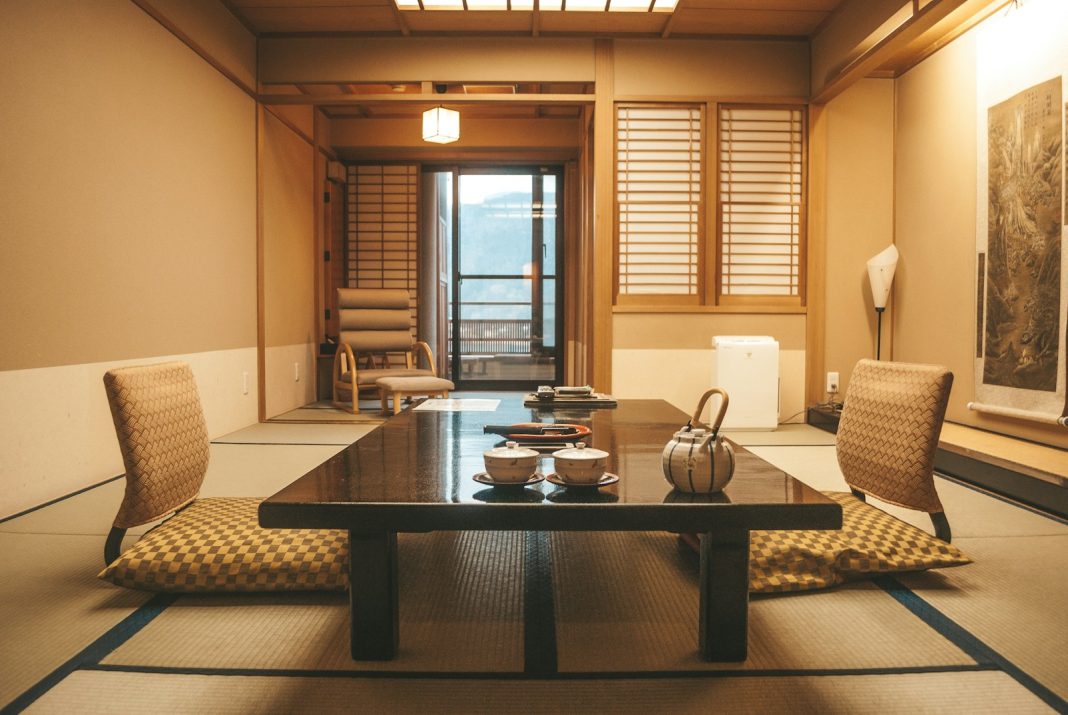

In a world where design often leans toward extravagance and constant reinvention, Japanese interior design stands apart — quiet, intentional, and timeless. Its calm beauty doesn’t demand attention; it invites it gently. Rooted in centuries of culture, philosophy, and craftsmanship, Japanese interiors express a refined simplicity that reflects a way of living as much as a style of decorating. The essence of Japanese design is not found in luxury or abundance, but in the serenity that comes from balance, restraint, and deep respect for nature.
This essay explores the principles that make Japanese interior design so uniquely calming — its focus on minimalism, natural materials, the philosophy of wabi-sabi, and the seamless harmony between indoor and outdoor spaces. Together, these elements form more than a visual language; they shape an atmosphere that nurtures peace, mindfulness, and quiet joy.
- The Philosophy Behind the Aesthetic
To understand Japanese interior design, one must first understand its underlying philosophy. Unlike many Western approaches that focus on filling a room with things to express identity, Japanese interiors begin with emptiness. Space itself is sacred. In Japanese culture, simplicity is not a lack of decoration; it’s an intentional clearing of distractions so that what remains can truly be appreciated.
The concept of ma — the beauty of empty space — is central. It is the pause between things, the silence that gives meaning to sound. In interiors, ma manifests as uncluttered layouts, open floor plans, and thoughtful spacing between furniture and architectural features. The goal is not to decorate every corner but to allow breathing room, both visually and spiritually.
This mindset stems from Zen Buddhism, which emphasizes mindfulness and inner calm. A Japanese home reflects this through design that encourages presence. Everything has a place and purpose; nothing is arbitrary. The result is a home that doesn’t overwhelm, but soothes — a sanctuary from the noise of daily life.
- Natural Materials and Organic Harmony
Nature is the foundation of Japanese design. Materials are chosen not just for function, but for how they age, feel, and interact with light. Wood, bamboo, paper, and stone are favored for their warmth and natural imperfections. They bring the outside world inside, reminding occupants of the cycles of nature — of growth, change, and transience.
Wood, especially, is a constant presence. From the light tones of hinoki (Japanese cypress) to the darker hues of cedar or pine, wood gives structure and softness. Tatami mats made of woven straw provide texture underfoot and a gentle, earthy scent that anchors the senses. Shoji screens — translucent panels made from wood and paper — filter sunlight into a diffused glow, creating an atmosphere that shifts gently throughout the day.
This organic approach extends to how materials are treated. Surfaces are often left unpainted, allowing grain, texture, and imperfection to be celebrated rather than concealed. The Japanese eye finds beauty in authenticity — in the way wood darkens with age or how a handmade ceramic bowl reveals the trace of its maker’s hands. This appreciation forms the basis of wabi-sabi.
- Wabi-Sabi: Finding Beauty in Imperfection
At the heart of Japanese interior design lies wabi-sabi, a philosophy that embraces imperfection, impermanence, and incompleteness. It’s a worldview that values authenticity over perfection and depth over decoration. A slightly uneven wall, a crack in a teacup, or the weathered patina of old wood are not flaws — they are evidence of life and time.
In a wabi-sabi home, materials are allowed to breathe and evolve. A handmade table with small knots and variations in color becomes more beautiful as it ages. Linen curtains soften over time, and ceramic dishes gain character with every use. This philosophy offers an antidote to our culture of constant replacement and newness. It reminds us that beauty can deepen through wear, that calm can be found in accepting things as they are.
A wabi-sabi interior feels intimate and grounded. Colors are muted — soft grays, off-whites, browns, and greens drawn from nature’s palette. Textures are tactile and honest. Nothing screams for attention, yet everything quietly harmonizes. The overall effect is not cold minimalism but warm simplicity — a balance of order and imperfection that feels profoundly human.
- The Flow of Space: Light, Movement, and Connection
Japanese homes are designed to adapt, breathe, and respond to life’s rhythms. Traditional houses often use sliding doors (fusuma) and movable partitions, allowing spaces to expand or contract depending on the occasion. This flexibility reflects an understanding that life changes, and homes should change with it.
Light, too, is treated with reverence. Instead of flooding rooms with harsh brightness, Japanese interiors favor soft, filtered illumination. Light is considered a material — as tangible as wood or paper. It shapes mood, texture, and perception. Jun’ichirō Tanizaki, in his essay In Praise of Shadows, wrote beautifully about how shadow enhances beauty, making objects feel deeper and more mysterious. The dim glow of a paper lantern, the subtle shimmer on a lacquered tray — these quiet details create intimacy and depth that bright light would erase.
Perhaps most distinctive is the seamless connection between indoors and outdoors. Large windows and open verandas invite gardens to become part of the living space. The Japanese garden itself — with its stones, moss, and carefully pruned trees — is an extension of the same design philosophy: restraint, balance, and reverence for nature. The result is not a division between house and garden, but a dialogue — a constant flow of sight, sound, and air that reminds inhabitants of the natural world beyond their walls.
- Minimalism with Meaning
The minimalism of Japanese interior design is often misunderstood as a purely aesthetic choice — empty rooms, plain colors, sparse decoration. But in truth, it’s a spiritual and emotional practice. Minimalism in this context isn’t about having less for the sake of less; it’s about creating space for peace and clarity.
Each object in a Japanese home has intention. The placement of a vase, the curve of a chair, the simplicity of a single flower in a tokonoma (an alcove designed for art or seasonal decoration) — these choices carry quiet meaning. This level of attentiveness transforms ordinary surroundings into something almost meditative. When everything unnecessary is stripped away, what remains — a beam of sunlight, a cup of tea, the rustle of bamboo outside — becomes infinitely more vivid.
The restraint of Japanese design also teaches sustainability. By valuing longevity and craftsmanship over trends, it encourages mindful consumption. A handmade piece crafted with care becomes a lifelong companion, not a disposable item. In a time of mass production, this mindset offers a more conscious, grounded way to live.
- The Modern Interpretation
While traditional Japanese design remains deeply respected, modern interpretations continue to evolve. Contemporary architects and interior designers often blend Japanese principles with global influences, creating spaces that are minimalist yet warm, contemporary yet deeply rooted in tradition.
Modern Japanese interiors may include clean-lined furniture, neutral tones, and open layouts inspired by Western design, but the soul of the space — the emphasis on light, balance, and connection to nature — remains distinctly Japanese. Even in urban apartments far from the countryside, potted plants, natural wood finishes, and shoji-style panels bring a sense of calm and continuity.
This adaptability is part of what makes Japanese design so timeless. It’s not a rigid set of rules, but a living philosophy that evolves with its environment. Whether through traditional tatami rooms or modern minimalist lofts, the underlying message endures: peace is found not in abundance, but in harmony.
- A Reflection of Life Itself
Ultimately, the calm beauty of Japanese interior design is not just about what you see — it’s about what you feel. It invites you to slow down, to notice the play of shadow on a wall, to listen to the whisper of wind through bamboo. It turns a home into a sanctuary, not by dazzling the eye, but by quieting the mind.
In a sense, Japanese design mirrors life itself: transient, imperfect, yet profoundly beautiful when lived with awareness. Its spaces are not built merely to impress, but to heal — to remind us that simplicity, nature, and time are not things to escape, but to embrace.