
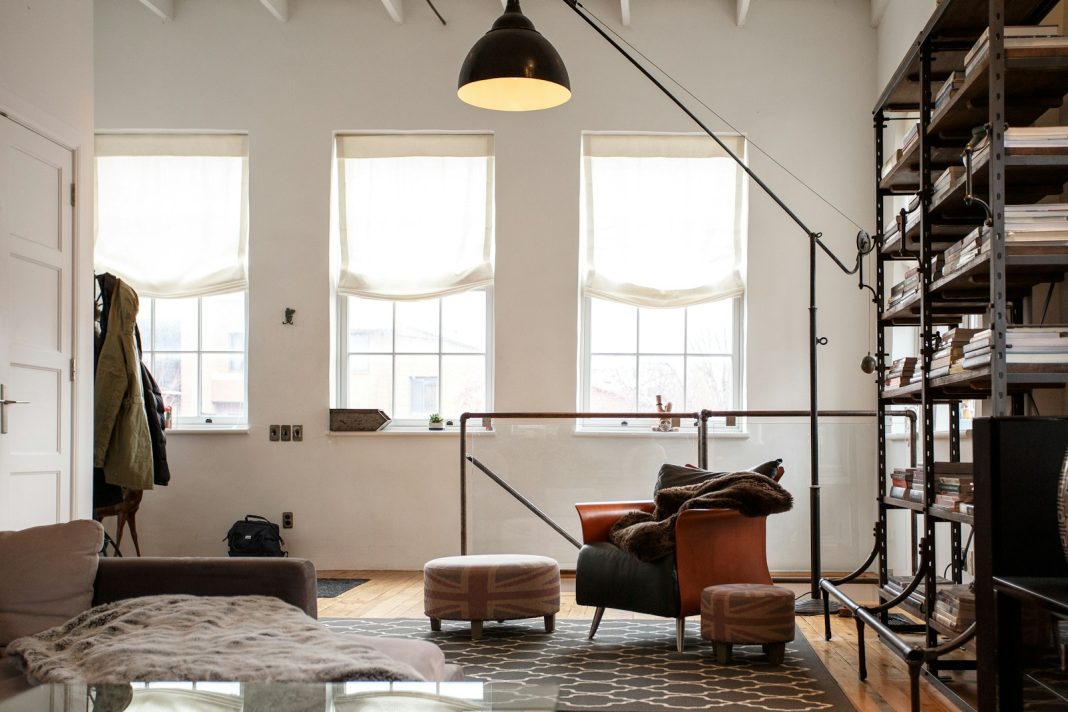

In an age where our homes have become more than just places to eat and sleep — now serving as offices, sanctuaries, and social hubs — the desire for spaciousness has never been greater. Yet, for many, space itself is a luxury. Apartments shrink, closets overflow, and countertops disappear beneath the weight of modern life. Minimalist living offers a refreshing counterpoint: not the denial of comfort, but the intentional pursuit of clarity. It’s a design philosophy and a mindset rolled into one — about maximizing every inch, not by cramming more in, but by embracing less, thoughtfully.
- Understanding Minimalism Beyond Aesthetics
Minimalism is often misunderstood as a cold, sterile style defined by white walls and empty rooms. But at its core, it’s not about deprivation — it’s about purpose. A minimalist home isn’t empty; it’s essential. Every object, color, and piece of furniture earns its place. Rather than cluttering a room with what’s trendy, the minimalist approach celebrates what’s timeless and meaningful.
True minimalism begins with a question: What do I truly need to live well? That question is less about design and more about lifestyle. It’s about curating, not cutting — finding balance between functionality, comfort, and serenity.
- The Psychology of Space and Simplicity
Our environment profoundly influences our mental state. A cluttered space can mirror a cluttered mind, while simplicity invites calm. Studies in environmental psychology show that visual chaos — too many objects, colors, or stimuli — can heighten stress levels and decrease focus. In contrast, streamlined surroundings promote relaxation and clarity.
When we remove excess, we make room for breathing space — not just physically, but mentally. A minimalist room often feels larger not because it has more square footage, but because it has less noise. Negative space — those open areas between objects — becomes as important as the objects themselves. It’s a quiet luxury that money can’t buy.
- The Art of Decluttering: Where It All Begins
The journey toward minimalist living always starts with letting go. Decluttering isn’t about tossing everything you own; it’s about keeping what matters. Start small — a drawer, a shelf, a single closet. Ask yourself: Do I use this? Do I love it? Does it serve a purpose?
Marie Kondo popularized the idea of keeping only what “sparks joy,” but minimalism goes a step further: keeping what adds value. Maybe it’s a practical value — like a kitchen tool you use daily — or emotional, like a photograph that reminds you of home.
Decluttering is liberating, but it can also be emotional. Each object carries a story. The key is to honor those memories, but not let them control your space. When you let go of the unnecessary, you discover what’s truly essential — and often, that realization feels lighter than any physical change.
- Designing with Purpose: Function as Beauty
In minimalist living, form follows function — but that doesn’t mean beauty is sacrificed. Quite the opposite: simplicity often reveals elegance. A well-crafted wooden table, a linen curtain, or a single piece of art can speak louder than a room full of distractions.
Multi-functional furniture becomes a minimalist’s best ally. A storage ottoman doubles as seating; a foldable desk turns a corner into a workspace. Built-in shelves, sliding doors, and under-bed drawers quietly expand usable space. Every inch counts, and every item earns its keep.
The beauty of this design approach is that it grows with you. A minimalist space is flexible, not fixed. It adapts to new purposes without demanding constant redecoration.
- Light, Color, and Air: The Invisible Elements
Maximizing space isn’t only about furniture — it’s about perception. Light, color, and air transform how a room feels. Pale or neutral tones reflect natural light and make walls recede visually, creating a sense of openness. White, beige, taupe, and soft gray are timeless minimalist favorites because they act as a canvas rather than a statement.
Mirrors can amplify brightness and depth, especially in small spaces. Position one opposite a window and watch the room expand. Sheer curtains, instead of heavy drapes, invite daylight in while preserving privacy.
Ventilation also plays a quiet role. Fresh air clears not just the room, but the mind. Even in urban apartments, a cracked window or a small indoor plant can introduce a feeling of renewal — a simple gesture that reinforces the minimalist principle of balance between human and environment.
- Texture: The Soul of Simplicity
Minimalism doesn’t mean monotony. A common misconception is that minimalist homes are cold or impersonal, but warmth emerges through texture. The interplay of smooth and rough, soft and structured, creates visual interest without visual clutter.
Think of a wool rug under bare feet, a linen throw over a clean-lined sofa, or matte ceramics beside polished wood. Each material invites touch and adds depth. By layering textures instead of objects, you achieve richness without chaos — a room that feels alive but not loud.
- The Power of Smart Storage
Minimalist living thrives on smart storage solutions that keep essentials close yet unseen. Open shelving can display carefully chosen items, but hidden storage maintains calmness. Drawers within steps, cabinets that rise to the ceiling, and furniture that conceals storage spaces help maintain visual simplicity.
One key principle is accessibility. Store items you use daily within reach and relegate seasonal or infrequent objects to higher or hidden areas. Clear containers and labels reduce the frustration of searching, while vertical storage takes advantage of forgotten wall height.
Minimalists understand that storage isn’t a dumping ground — it’s an extension of design. A well-organized cabinet is as beautiful as the room it supports.
- Minimalism and Technology: A Modern Symbiosis
Technology can clutter or clarify, depending on how it’s integrated. Cables, screens, and chargers can quickly break the visual peace of a room. Concealed wiring, wireless systems, and all-in-one devices help maintain the minimalist aesthetic.
Smart home systems — dimmable lights, automated blinds, or speakers built into walls — can simplify living without adding bulk. The key is discretion: technology should serve life, not dominate it. In a minimalist home, even devices should blend quietly into the background, performing seamlessly rather than shouting for attention.
- Living Intentionally, Not Just Minimally
Minimalist living is less about possessions and more about perspective. It’s a conscious choice to prioritize experience over excess. When we simplify our surroundings, we rediscover what truly enriches us — time, peace, creativity, and connection.
A minimalist lifestyle encourages mindfulness. Cooking becomes deliberate when your kitchen isn’t buried in tools you never use. Relaxation deepens when your living room isn’t shouting for attention. Even cleaning becomes less of a chore when there’s simply less to manage.
Ultimately, minimalism teaches gratitude — for what we have, for the spaces we inhabit, and for the clarity that comes from enoughness.
- Sustainability: The Natural Extension of Minimalism
Minimalist living naturally aligns with sustainability. By buying less and choosing better, we reduce waste and consumption. Investing in durable, well-made furniture over disposable trends saves both resources and money in the long run.
Secondhand markets, upcycling, and mindful purchasing all support a more sustainable lifestyle. Minimalism isn’t anti-material — it’s anti-disposable. When we respect the objects we own and maintain them with care, our homes become expressions of stewardship as much as style.
- The Beauty of Breathing Space
The final secret of maximizing every inch lies in not filling it. Empty space — a bare wall, a cleared surface, a stretch of open floor — allows the eye to rest. It’s tempting to decorate every corner, but restraint is what gives a home rhythm and calm.
Breathing space reminds us that absence can be beautiful too. It highlights what is there — the texture of wood, the curve of a chair, the softness of light. In the quiet moments between objects, the spirit of minimalism truly lives.